Monday, May 2, 2016

Taste test? Deer preferences seem to help non-native invasive plants spread


UNIVERSITY PARK, Pa. -- Selective browsing by white-tailed deer likely is promoting the spread of some invasive plant species in northeastern U.S. forests, as deer avoid eating vegetation they find unpalatable. That's the conclusion of researchers who conducted a study of deer dietary choices at the Penn State Deer Research Center, during which captive deer were simultaneously offered a selection of eight non-native invasive and seven native plants to determine the animals' preferences.

The research is important because it quantifies interactions between deer and invasive plants -- and how, over time, deer might be exacerbating problems with non-native plant species, according to researcher David Mortensen, professor of weed ecology in Penn State's College of Agricultural Sciences. He expects the findings to contribute to the conservation of forest understories and natural areas.

"This study provides evidence that deer impacts on plant invaders depend on plant species' palatability," he said. "Consequently, deer selectivity likely plays an important role in the invasion process. To the extent that herbivory impacts plant communities, these results suggest that deer promote the spread of some plant invaders by avoiding them."

In the study, published this month in the journal Biological Invasions, researchers documented feeding preferences of eight mature does without fawns through three seasons (late summer, early autumn and spring). The 15 plant species were offered in containers where deer could choose among them. A camera activated by a motion detector and infrared-enabled for night viewing allowed the researchers to observe and record deer behaviors. The amount of each plant consumed also was measured.

While deer consumed more native than introduced plant biomass overall, their food preference varied strongly by plant species. Results show consistent deer avoidance of several invasive, introduced plants -- garlic mustard (Alliaria petiolata), Japanese barberry (Berberis thunbergii) and Japanese stiltgrass (Microstegium vimineum). Deer also avoided one native plant, hay-scented fern (Dennstaedtia punctilobula). That species, which some researchers consider a "native invader," is spreading in areas of forest underbrush where deer are abundant. But other invasive, introduced plants -- Oriental bittersweet (Celastrus orbiculatus), European privet (Ligustrum vulgare), and Morrow's honeysuckle (Lonicera morrowii), and a native plant, red maple (Acer rubrum) -- were highly preferred by deer.

Deer clearly avoid certain invasive plants that are increasing in abundance in natural areas, suggesting that the herbivores are indirectly contributing to the growth and spread of unpalatable invasive plant species, noted lead author Kristine Averill, who spearheaded the research while pursuing her doctoral degree in Ecology at Penn State. Now a research associate in Cornell University's Soil and Crop Sciences Section, she suggested that deer preferences play an influential role in determining the species that make up plant communities.

"Together, these biomass consumption and behavior data indicate that deer selectivity likely depends more on species and growing season than on native or invasive introduced plant status," she said. "The extreme preference and avoidance among plant species observed in the preference trials suggest that deer-browsing selection occurs on a species-by-species basis, and likely according to species' traits."

At a minimum, Averill explained, the research indicates that deer might play an important and indirect role in the invasion processes of introduced plants. "These species-level, deer-plant interactions should contribute to deeper understanding of the variable patterns of invasive introduced plants across the northeastern U.S.," she said.

"It's pretty revealing that the findings in this study correspond to what we have been seeing in the field and confirm that deer preferences play a major role in plant community assembly." Still, some invasive plants that deer seemed to highly prefer are increasing in abundance in natural areas. That pattern may be exacerbated by the deer because these plants produce fleshy fruits that deer eat, and then the seeds of the plant are spread in their feces, Averill noted.

Also contributing to the study were Penn State researchers Erica Smithwick, associate professor of geography, and Eric Post, professor of biology. The study was funded partially by the U.S. Department of Agriculture.

Jeff Mulhollem
April 25, 2016

Wednesday, April 27, 2016

Why the Forestry “Profession” Should Harshly Criticize High-Grading

The below opinion piece was originally printed in the Winter 2016 issue of the National Woodlands magazine, of the National Woodland Owners Association. It addresses such an important topic and a common problem here in Pennsylvania that I received permission from the author as well as the magazine editor to reprint it here. Please feel free to write a response and share your thoughts after reading it.

Why the Forestry “Profession” Should Harshly Criticize High-Grading
by Dan Pubanz 

In the Autumn 2015 issue of National Woodlands was an article discussing why landowners high-grade their forests. While the explanations of these causes are clear, the concluding paragraph stated that “the forestry profession should be careful about harshly criticizing these short-term actions until we can provide long-term movement toward sustained yields while meeting short term economic and ecological needs.” If the forestry profession truly considers itself a reputable profession, it should vigorously disagree with this statement.

The woods on left were high graded 20 years ago, the right likely awaits the same fate.
While a lack of landowner understanding can often be a cause of high-grading, in many cases, high-grading is actually implemented by formally trained foresters.  In the most egregious situations, it is knowingly imposed by the forester on an unknowledgeable landowner.  Even more insidious are the more subtle degrades that take just the highest-quality trees from a forest and camouflage it by also taking a few other lower-grade trees. Foresters have long lamented the public’s poor perception of the practice of forestry and the forestry profession. Every high-graded woodlot only reinforces that perception and we are kidding ourselves of we think it doesn’t. Landowners are free to do with their land as they see fit and landowner-instigated high-grading will continue. However, a forester should never be involved in that process.


The problem of high-grading lies, fundamentally, with a lack of ethics. In forestry, we are asked to condone short-term greed that produces long-term detrimental impacts, both to the land and to the community. While other professions have standards that are supposed to curtail short-term greed (at least in theory), in forestry we accept this greed with a shrug. High-grading a forest is not justifiable even if driven by financial need. It would be far better for a cash-strapped landowner, before degrading the forest’s productivity, to sell the forest to someone who has the ethics to manage for long term sustainability.

High-graded acreage is a primary driver impeding movement toward sustained yield. Once a woodlot is high-graded, poor quality timber will occupy the site for generations before another harvest producing high-quality products can occur. In many cases, we are managing lands today that were high-graded decades ago. These lands are still far below their productive capacity and decades from being capable of sustainably producing sawlogs. We harvest the low-grade cordwood in an effort to improve their degraded condition and to supply markets with some fiber. Arguments that we should continue to accept unsustainable high-grading until we reach long-term sustainability are mystifying, at best.

Since at least 2005, the Society of American Forester’s position has been that an SAF forester’s obligation to the SAF Code of Ethics would be met as long as the forester explained the negative consequences of high-grading to the landowner. In short, foresters expect that as long as we explain the negatives, we are absolved of any responsibility for the adverse consequences. It is unlikely that the American Medical Association would accept such an approach. A better approach is found in the Forest Stewards Guild Principles, which state, in part: “When the management directives of clients or supervisors conflict with the Mission and Principles of the Guild [which preclude high-grading], and cannot be modified through dialogue and education, a forester or natural resource professional should disassociate.” The public will never regard forestry as a true profession until the “profession” takes a firm stand against any and all high-grading, and eliminates forester involvement with high-grading.

High-grading is never defensible and should always be harshly criticized by the forestry profession.

Dan is a consulting forester who manages Wolf River Forestry LLC in Shawano, Wisconsin.

Monday, April 18, 2016

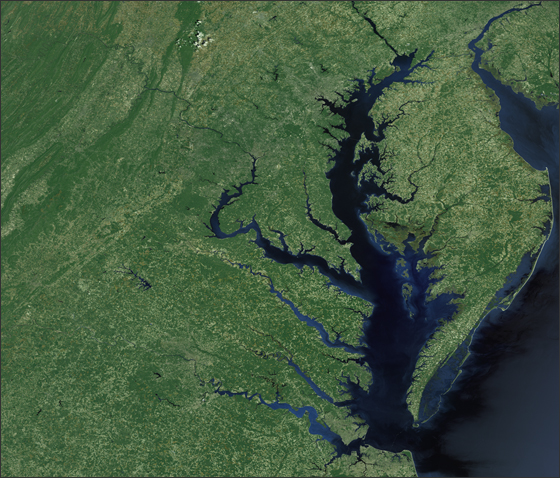
Meeting Forested Riparian Buffer Goals in the Chesapeake Watershed


ANNAPOLIS, Md.--The Northeastern Area State and Private Forestry's Chesapeake Watershed Forestry office teamed with partners to hold a 2-day Riparian Forest Buffer Forum in Buckeystown, MD. The forum brought together approximately 100 Federal, State, and local stakeholders from the six-state region, to share strategies on how to attain the steep goals for riparian buffers in the Chesapeake Bay watershed. Topics included how buffers help meet other Chesapeake goals, buffer initiatives, partnering for outreach and implementation, and Farm Bill programs and policies.  Learn about forest buffers at the Chesapeake Bay Program web site and blog.

Forest buffers, or the trees, shrubs and other plants that grow along streams and rivers, are critical to the health of the Chesapeake Bay. Forest buffers prevent pollution from entering waterways, stabilize stream banks, provide critters with food and habitat, and keep streams cool during hot weather (to the benefit of sensitive aquatic species). Chesapeake Bay Program partners are working to restore 900 miles of forest buffers per year until 70 percent of all stream banks and shorelines in the watershed are buffered. Since 1996, a total of 8,152 miles of forest buffers have been planted along rivers and streams in the Chesapeake Bay watershed. While progress is being made to restore streamside trees and shrubs, it is slow: since 2009, plantings have declined almost every year.

Tuesday, April 12, 2016

Spring: A Great Time to Scout for Invasive Plants


Bush honeysuckles leafing out in the spring
Drive down any country road or take a walk in your favorite woodlot and you'll probably find non-native plant species beginning to show themselves this spring. They have invaded our forests, stream corridors, meadows, and yes, even home landscapes. Have you ever walked your property and wondered why there seems to be plants that are taking over? There is a good chance some are exotic invasives.

Spring is a great time of year to scout for invasive plants. These invasive exotic plants tend to leaf out much earlier than our native plants. This allows you to effectively scout your property, identify what species you have, make note of locations, and plan how you will control it. For some it may be as easy as pulling it once you have it correctly identified. For others more complicated interventions may be required. 

Pulled bush honeysuckle
Your property may already be invaded by “exotic invasive” plants or you might have even accidentally planted some in your landscape that will soon escape and invade a nearby forest or stream corridor. As good stewards we need to become aware of the impact these non-native invasive species have on our local environment and learn to identify and properly control these species before they completely take over an area.

What is an “Exotic Invasive Plant”?
It is really just another name for a weed that was introduced from other countries and has escaped cultivation causing serious harm to habitats for native plants and wildlife. Before you start tearing out all your landscape plants, you must know that NOT all non-native plants are classified as invasive and there are some native plants that have a tendency to become invasive (for example hayscented and New York fern).  For a plant to be considered “invasive,” it typically grows aggressively (on various sites and growing conditions), spreads quickly (by seed, roots, or cuttings), lacks natural predators, pathogens and parasites, and displaces native plants.

Garlic Mustard flowers in the spring and is easily pulled.
So What Can Be Done to Prevent and Control “Exotic Invasives”?
    Become Educated and learn what invasive species look like. Contact your local Penn State Cooperative Extension office in your county and request information (fact sheets) about specific invasive species or drop off plant samples for identification.
    Don’t plant species that are considered invasive. Get a copy of plant listss that should not be planted.
    Discover native alternatives in your landscape. Promote responsible gardening by learning about the native plants around you.  Buy nursery propagated native plant material.  Never dig or buy plants that have been dug in the wild. 
    Remove or control invasive exotics plants from your landscape and replace them with native plants or non-invasive exotics. To properly control many invasive plants, some herbicide use may be required. Many can simply be pulled but for others pulling or cutting only encourage them to spread more.  The impact of leaving an exotic invasive to take over a site outweighs the use of herbicides to remove it.

Some Great Resources:


Article revised from "Has your property been “invaded”?" by Vincent Cotrone, September 2012.